
Hamas has perfected a form of combat that unfolds not on the battlefield but across screens and social‐media feeds. Since its October 7 operation, the movement has run two distinct propaganda campaigns—one in English for Western audiences and one in Arabic for regional supporters—that function as dual prongs of its strategic arsenal. By tailoring its narrative to different linguistic and geopolitical contexts, Hamas maximizes its reach: it draws diplomatic pressure against Israel abroad while bolstering morale, recruitment, and legitimacy at home.
In the days after Operation Ṭūfān al-Aqṣā, Hamas pivoted sharply to a bilingual media apparatus hosted on Telegram. The English Channel presents Gaza as a humanitarian catastrophe, dominated by images of bombed hospitals, injured children, and displaced families. Three-quarters of its 36 video posts between October 2023 and July 2024 feature what I call a “civilian victimization” frame. Hamas uses stark visual evidence to accuse Israel of war crimes and genocide—tagging videos #GazaHolocaust, alleging prohibited‐weapons use, and invoking international humanitarian law. These legalistic appeals resonate deeply with human-rights organizations, international media outlets, and Western publics attuned to moral and judicial arguments. Without denying its identity as an armed resistance movement, Hamas foregrounds a portrayal of itself as a defender of besieged civilians who deserve global sympathy and solidarity.
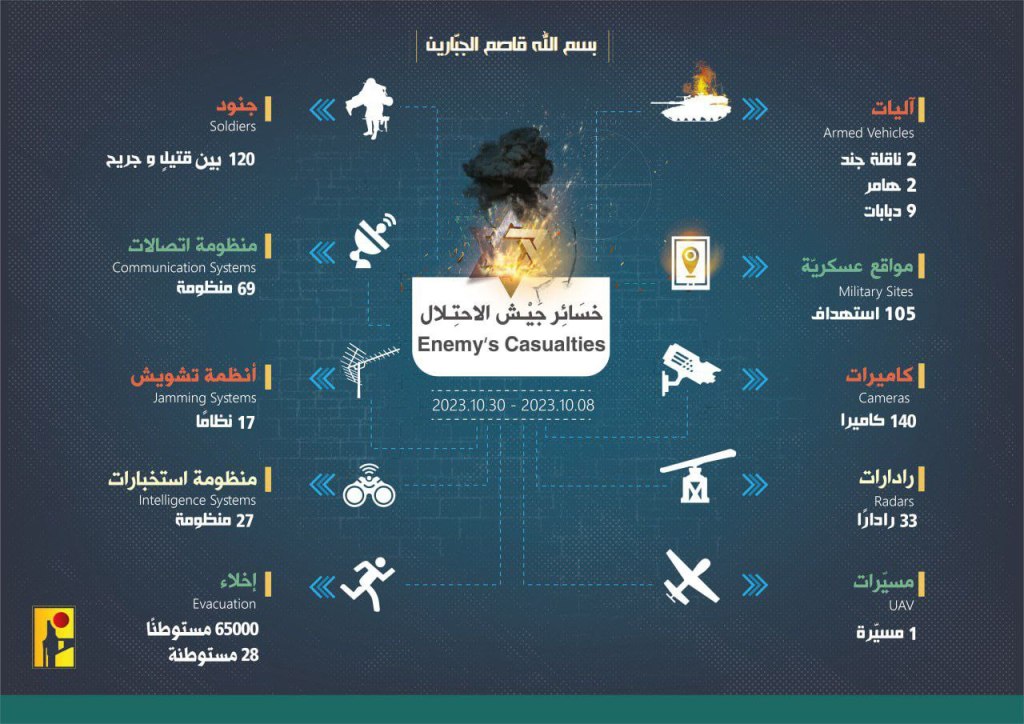
In stark contrast, Hamas’s Arabic-language streams channel a more martial ethos. The Ezz al-Din al-Qassam Brigades’(EQB) channel and the Hamas-Online Arabic feed devote roughly 80 percent of their content to “military victory” narratives—snippets of rocket launches, drone footage of destroyed tanks, and celebrations of successful ambushes. Another 18 percent valorize fallen fighters through martyr posters adorned with Quranic verses. These posts sanctify sacrifice, reinforce a religiously infused resistance identity, and sustain recruitment by presenting martyrdom as an honored path to both spiritual and national liberation. A smaller but still significant fraction emphasizes operational morality—orderly treatment of hostages and denials of atrocity rumors—to counteract depictions of indiscriminate violence.
By segmenting its messaging, Hamas avoids the pitfalls of a one-size-fits-all campaign. Graphic footage of civilian suffering might well provoke Western outrage but could demoralize fighters or deter recruits among Arabic-speaking constituencies. Conversely, battlefield success montages would alarm international donors and human-rights advocates, undermining Hamas’s claim to moral legitimacy abroad. Separating the scripts allows each narrative to thrive unencumbered: the English Channel weaponizes victimhood to rally diplomatic pressure on Israel, while the Arabic channels weaponize martial prowess to uplift regional solidarity and deter adversaries.
This dual approach extends to how Hamas and EQB present themselves in “About Us” pages. The Arabic version immerses readers in jihadist and religious rhetoric, invoking divine obligation, anti-colonial struggle, and the sacredness of Palestinian land. The English version strips away explicit religious language, replacing it with a more neutral, legalistic tone that emphasizes occupation, human-rights violations, and stateless national liberation. This “discursive redaction” recasts Hamas as a rational actor defending a besieged people rather than as an Islamist movement, smoothing ideological edges that might repel secular or moderate Western sympathizers.
The Arabic streams drive recruitment, financial support, and deterrence calculations across the Middle East, while the English stream influences international forums, foreign policy debates, and diaspora mobilization.
Hamas’s bilingual propaganda offers a master class in audience segmentation. It demonstrates that winning hearts and minds in a protracted conflict requires mastering not only rockets but rhetoric. The movement’s split-screen approach exemplifies how nonstate actors can navigate global and regional information environments with surgical precision. The struggle for Palestine’s future will not end on the battlefield alone; it hinges equally on the capacity to project narratives that align with the moral expectations of Western people and the mobilization needs of regional communities.
In the evolving theatre of modern insurgency, the power of propaganda rivals the power of firepower. By sustaining two parallel media universes—one of victimhood, one of victory—Hamas ensures that it remains both a martyr and a victor, a besieged defender on one screen and a triumphant resistor on the other. Recognizing and responding to this reality will prove as critical to shaping the conflict’s trajectory as any cease-fire or diplomatic initiative.
 Analysis for a Changing World