
Issue 516 of al-Nabāʾ presents a tightly coupled package: a didactic editorial that defines true belief as obedience verified by deeds, and field coverage that performs this doctrine through coercive social ordering—most vividly in northern Mozambique—and steady guerrilla pressure across Somalia (Puntland), West Africa (Borno/Diffa), Iraq (al-Anbār), Syria (Dayr al-Zūr/al-Raqqa), and eastern DR Congo (Ituri/Lubero).
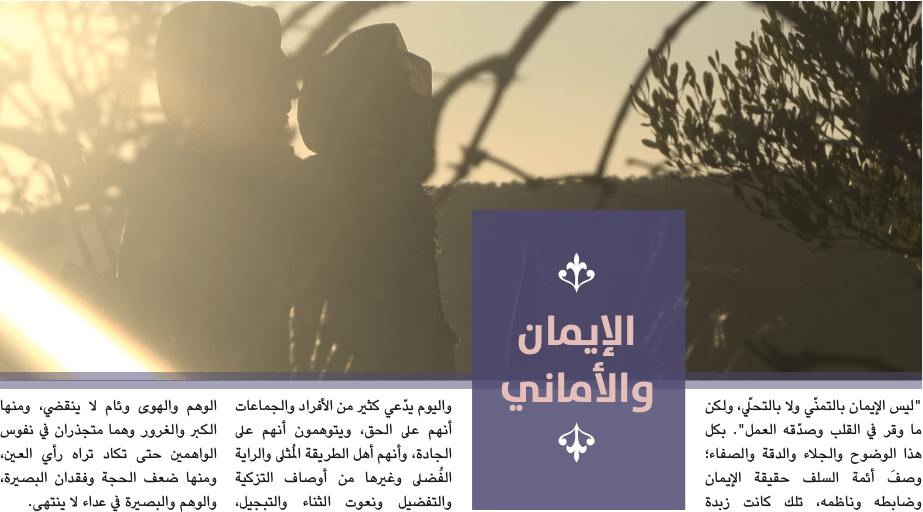
The editorial (“al-Īmān wa-l-Amānī”/Faith and Wishes) is classic boundary-policing exegesis. It opens with the maxim “faith is not by wishful thinking… but what settles in the heart and is verified by deeds,” and develops the point through Qurʾān 4:123—“not by your wishes nor the wishes of the People of the Book”—and 4:125 on the “Millat Ibrāhīm ḥanīfan.” The argumentative structure is familiar: claims of identity or affiliation are morally weightless unless substantiated by action; slogans and lineage cannot launder disobedience. The rhetorical target is both external and internal. Outwardly, the editorial delegitimizes rival Muslim actors and scriptural opponents as people of assertions without proof; inwardly, it disciplines sympathizers and fence-sitters by recoding piety as enacted compliance. That move clears normative space for coercion: if “truth” is verified by deeds, then violence, enforcement, and public punishment are not excesses but the lived grammar of faith. The week’s coverage in Mozambique—killings, church burnings, mass arson, and follow-on daʿwa rounds—arrives pre-justified by precisely this logic.
In Mozambique, the issue centers the north and aggregates routine claims of coercive activity—including attacks on civilians and churches—then pairs these with staged religious outreach. Crucially, it pairs violence with staged daʿwa (religious outreach): “mujāhid preachers” are said to have conducted daʿwa rounds in Nampula and entered Mocímboa da Praia for a third consecutive time to deliver lessons in a mosque. The sequencing—arson and expulsions followed by religious outreach—performs jurisdiction: the group signals the ability to punish, expel, and then “teach” in spaces where the state’s presence is intermittent. It is governance-performative propaganda, not just tactical reporting.
Puntland is presented as a week of renewed clashes under aerial pressure. ISIS claims nine enemy killed and about a dozen wounded across several engagements. This is morale-facing copy with a tactical lesson embedded: ambush discipline and attrition can still generate scorelines under surveillance and strike risk. ISIS sustains the “proof of life” narrative that the Puntland node remains active despite counter-pressure.
In West Africa, the issue frames a Nigeria–Niger corridor of cross-border pressure, aggregating routine claims of harassment against security nodes and roadways. The emphasis is on mobility and disruption—short, opportunistic actions meant to signal presence and impose friction on local governance rather than to hold terrain. The operational motif is interdiction of fixed nodes and predictable routes between towns and garrisons: short, mobile raids that impose friction on daily military administration and civilian movement.
Across Iraq (al-Anbār) and Syria (Dayr al-Zūr/al-Raqqa), the publication treats both as economy-of-force fronts, aggregating low-intensity incidents—roadside blasts and small-arms harassment against security forces and vehicles—to project continuity and presence. The emphasis is on routine pressure rather than decisive effect or territorial control: low-cost harassment to keep pressure on counter-ISIS formations and sustain the claim of routine activity.
In DR Congo (Wilāyat Wasaṭ Ifrīqiyyā), ISIS foregrounds sectarian violence—claims of attacks on Christian civilians and community targets—alongside pressure on local security infrastructure. The blend of intimidation in populated areas with strikes on outposts is staged to suggest the capacity to reorder everyday life through fear and selective spectacle; as elsewhere, this functions as narrative performance rather than a verifiable accounting.
Issue 516 also includes a quotation page (from Ibn al-Jawzī’s Ṣayd al-Khāṭir) lauding the believer’s orientation to the afterlife—an ascetic, steadying theme that complements the editorial. Together they serve a cohesion function: elevate endurance, purge doubt, and align “right feeling” with “right action.” In movement-discipline terms, this is the “moral superiority plus steadfastness” pairing that justifies high-risk operations and public punishments alike.
Notable shifts this week are straightforward:
- Mozambique slides from episodic raids toward area influence operations. The back-to-back daʿwa entries, bracketed by church burnings and mass arson, advertise not only lethality but a claim to set religious-social terms in contested municipalities.
- Puntland gets a thicker battlefield narrative. Clustering multi-day ambushes under air pressure signals resilience and teaches a tactical idiom to a cadre audience: small units, prepared ground, and short, violent contacts can still bleed a better-resourced foe.
- In the Sahel, targeting extends beyond patrols to governance. The reported assassination of a local official, coupled with the burning of a checkpoint in Diffa, points to pressure on state presence itself, not just its convoys.
For monitoring, three policy-relevant implications follow:
- Northern Mozambique: Civilian and church-targeted risk is acute and strategic. The publication stages a coercion-then-daʿwa sequence to signal authority in contested areas; expect attempts to reprise this pattern. Prioritize protection of religious sites and displacement-triggered early warning, treating all claims as unverified.
- Puntland: Anticipate IED harassment on resupply and predictable approach routes. The “small units under air pressure” narrative typically seeks validation via roadside blasts; vary routes/timings and strengthen route clearance and overwatch.
- Diffa–Borno corridor: This remains a cross-border interdiction problem. Static checkpoints are vulnerable to low-cost disruption; emphasize mobile screening, randomized convoy schedules, and layered patrols to blunt the tactics depicted by the publication.
What stands out in Issue 516 is how doctrine organizes the structure of the publication. The editorial defines faith as enacted obedience; the news pages curate “evidence” to stage that claim. Across theaters—from Mozambique to Puntland and the Sahel, and across Iraq/Syria and eastern DRC—the issue pairs generalized violence, including attacks on civilians and religious sites, with choreographed religious outreach and routine harassment of state-linked targets. Taken together, it reads less as reporting than as a pedagogy of coercion: a communications script that recasts intimidation and social control as governance and urges followers to treat violence as practice-centered piety. These are movement-produced claims without independent verification, but the narrative intent is clear—normalize punitive control as the proper expression of belief.

