
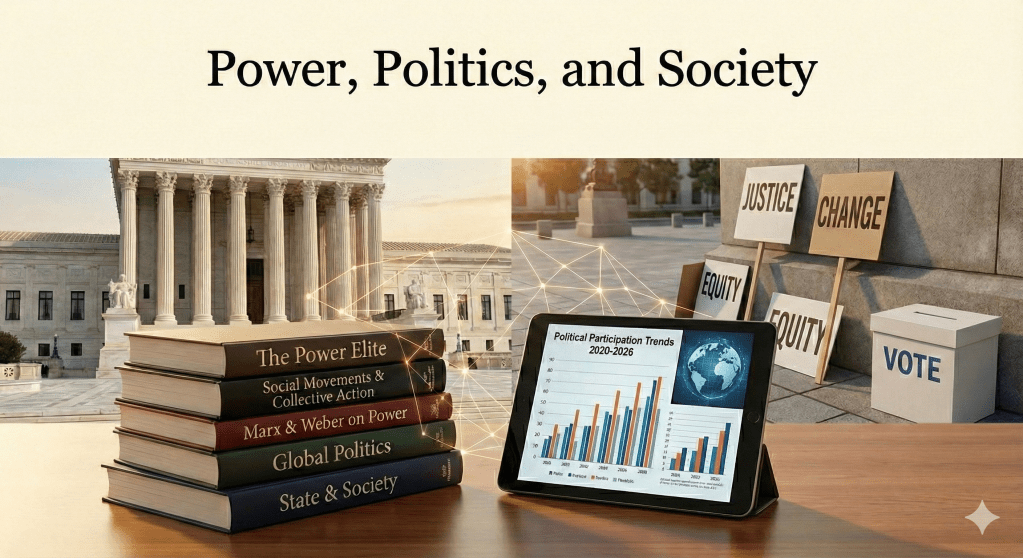
The international system we have known since World War II is in crisis. Competing actors are challenging the political order and the sources of authority and influence that sustained it for decades. At the same time, we live in a society that is not only more globally interconnected than ever before, but also intensely aware of that interdependence. That self-awareness reshapes politics: it alters what people imagine as possible, what they accept as legitimate, and what they are willing to contest.
Power, Politics, and Society1 is designed to help students make sense of this moment. The course’s purpose is to provide the conceptual frameworks and analytical skills needed to understand contemporary struggles over power and governance, without reducing them to headlines or partisan reflexes. The premise is straightforward: if we can identify the mechanisms through which power operates, we can better evaluate political claims, institutional change, and social conflict.
The course is organized around five core questions:
- What are power and politics, and how do they relate to states, markets, and society?
- What dynamics define and sustain democratic and authoritarian political systems?
- How do social actors define, attain, sustain, and lose power in a globalizing world?
- What challenges arise as societies attempt to build institutions capable of addressing transnational problems such as environmental crisis, inequality, and contested notions of security?
- What is the relationship between democracy and human rights, and how can each become politicized or depoliticized?
Latest Posts
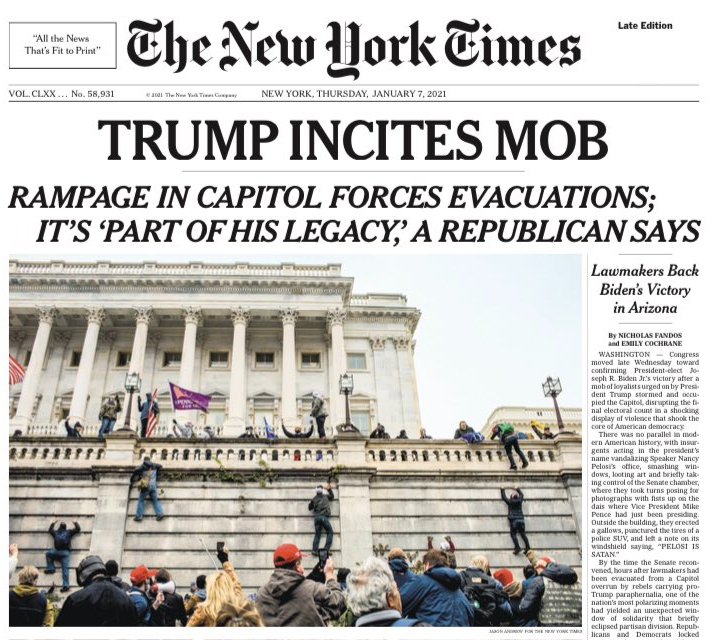
Our exploration follows a deliberate intellectual strategy, with each part of the course building on the last. Students move from foundational concepts to sharper critiques, and then toward alternative perspectives and analytical lenses.
First, we begin with foundations and threats to democracy. Students broaden their democratic imaginations by working through core concepts such as power and legitimacy, and then examine the pressures that make democratic institutions fragile.
Second, we turn to political economy. Having established that democracy is not self-sustaining, we examine how economic orthodoxies and institutional arrangements shape the political landscape and structure what societies treat as “possible.”
Third, we move beyond critique to explore alternatives and marginalized perspectives, including feminist work on the politics of the commons, which invites students to rethink value, labor, and collective life.
The course is designed not only to transmit information, but to build specific capacities:
- Broaden democratic imagination: Students learn to recognize how democracy is reproduced (or undermined) in everyday life, and to take agency seriously: the capacity to act and shape outcomes, even under constraint.
- Develop analytical lenses: Students engage relational approaches in sociological analysis, including transnational sociology and decolonizing sociology, strengthening their ability to think logically, critically, and reflexively.
- Cultivate intellectual resilience: The course encourages openness to new ideas while also demanding disciplined judgment: the willingness to reach conclusions, to state them clearly, and to test whether they hold up.
- Translate sociological insight into public impact: The final project asks students to write a public-facing analysis in an op-ed style, practicing the craft of making rigorous arguments accessible to a wider audience.
Ultimately, this course is an invitation to learn how to see power more clearly: in institutions, in markets, in social movements, and in the everyday practices that make certain arrangements feel “normal.” In an era of profound political change, that capacity is not merely academic. It is a practical tool for navigating the world we all inhabit—and, inevitably, help shape.
- This course’s structure, themes, and core materials are inspired by the SOCI 340 syllabus authored by Professor John Dale, who previously taught the course. I adapted the syllabus for the current semester by updating assignments and weekly sequencing while retaining the course’s central questions and intellectual architecture. ↩︎

